





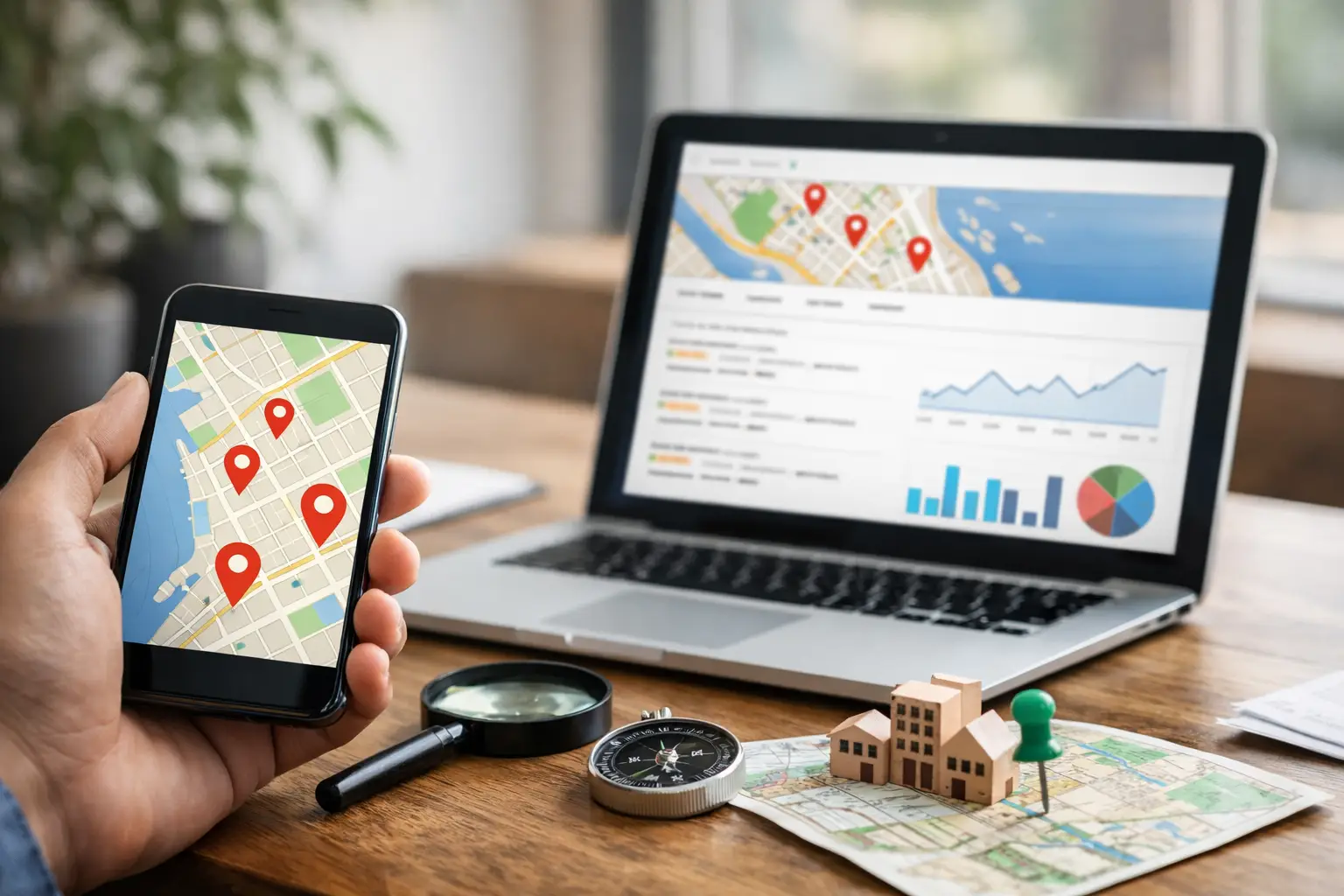
A plumber in Stourbridge, a solicitor in Halesowen and a retailer in Dudley can all have good websites yet receive very different levels of local search visibility. The difference usually comes down to how well their business information, website and reputation support the top local SEO ranking factors. Local SEO is not about chasing a single trick. It is about giving Google clear, credible reasons to show your business when a nearby customer is ready to call, visit or request a quote.
For small and medium-sized businesses, this matters because local searches often carry strong intent. Someone searching for a service in their area may need help that day. Appearing prominently in Google Search and Google Maps can therefore make a direct difference to enquiries, bookings and footfall.
How local rankings are decided
Google generally weighs three broad signals for local results: relevance, distance and prominence. Relevance is how closely your business matches the search. Distance is how near the searcher is to your stated location or the place they have searched for. Prominence is the level of confidence Google has in your business based on its reputation and wider web presence.
You cannot control every part of this. A business based in Stourbridge will not always outrank a comparable company located next to a customer in Birmingham. What you can control is the clarity and quality of the information Google finds, along with the experience customers have when they reach your website or business profile.
Top local SEO ranking factors to prioritise
A complete and accurate Google Business Profile
Your Google Business Profile is often the first thing a local customer sees. It powers much of the information shown in Maps and the local results panel, including your telephone number, opening times, reviews, photographs and directions.
Start with the fundamentals: use your real trading name, correct primary business category, accurate address or service area, local telephone number, website address and opening hours. Categories deserve particular care. A general category may be appropriate, but a specific category that accurately reflects your main service can make it easier for Google to understand when your listing should appear.
Add useful services, a clear business description, recent photographs and any relevant attributes. Keep seasonal hours updated, especially around bank holidays. Inconsistent or neglected profile information can frustrate customers before they ever reach your site.
For service-area businesses, such as electricians, cleaners or mobile trades, do not create a false office address simply to target another town. Google expects listings to represent a genuine business location. A properly configured service area is safer and more useful than a listing that risks being removed.
Consistent business details across the web
Your name, address and telephone number should be consistent wherever they appear online. This includes your website, social profiles, well-known directories and trade association listings. Minor formatting differences are rarely disastrous, but conflicting addresses, old phone numbers or variations of the business name make verification harder for both customers and search engines.
If you have moved premises, changed your trading name or introduced a new telephone number, update every important listing methodically. This is not the most glamorous part of SEO, but it prevents a common local visibility problem. It also makes it less likely that a prospective customer will drive to an old address or call a disconnected number.
A website built around real local services
A Google Business Profile alone is seldom enough in a competitive area. Your website needs to confirm what you do, where you work and why a customer should choose you. Clear service pages are more valuable than a single page trying to cover every service, town and keyword in a few paragraphs.
For example, a West Midlands roofing company may need distinct, helpful pages for roof repairs, flat roofing and guttering, provided those services are genuinely offered. Each page should explain the work, answer common customer concerns, show relevant experience and make the next step easy with a visible contact option.
Local relevance should be natural. Mention the areas you serve where it helps customers, include local project examples where permission has been given, and ensure contact details are prominent. Avoid creating dozens of thin pages that differ only by town name. Those pages rarely help users and can weaken the overall quality of the site.
Reviews that are earned and responded to
Reviews influence customer decisions and can support local prominence. The value is not simply in having a high star rating. A steady flow of genuine, detailed feedback gives people confidence that your business is active and dependable.
Make requesting a review part of your normal customer process. Ask once a job is complete or a product has been delivered, when the experience is still fresh. Do not offer incentives in return for positive reviews, and never use copied or purchased feedback. Both can damage trust and create problems if detected.
Reply to reviews in a calm, professional way. Thank customers for specific positive comments. If a complaint appears, acknowledge it without arguing publicly, offer to investigate and take the detailed conversation offline. A measured response will often reassure future customers more than a page of perfect but impersonal praise.
Trust signals and local authority
Google looks beyond your own website when assessing prominence. Mentions from respected local organisations, suppliers, trade bodies, community groups and relevant publications can strengthen your credibility. These may include local sponsorships, chamber memberships, professional accreditations, case studies or news coverage.
The quality and relevance of these signals matter more than sheer quantity. A genuine mention from a recognised regional organisation is more useful than a bundle of low-quality directory listings with no connection to your business. Focus on relationships and activity that would make commercial sense even if search engines did not exist.
Your website should also make trust easy to verify. Display company details where appropriate, explain qualifications and insurance, feature real team or project photographs, and include straightforward policies. For businesses handling enquiries through forms, an SSL-secured website and clear privacy information are basic expectations.
Mobile usability and a fast, accessible site
Many local searches happen on a mobile phone, often while the customer is travelling, at work or comparing nearby options. If your site takes too long to load, hides the phone number or makes the contact form awkward to use, a potential lead may simply choose the next result.
Mobile-friendly design is therefore a commercial issue as much as a technical one. Calls to action should be easy to find, text should be readable without zooming, and key pages should load efficiently. Large uncompressed images, unnecessary scripts and dated hosting can all slow a site down.
Accessibility helps too. Descriptive headings, sensible colour contrast, clear forms and useful image text make a site easier for more people to use. These improvements often make the page clearer for search engines as well.
What matters less than many businesses think
Keywords still help Google understand a page, but repeating phrases such as “best plumber Stourbridge” at every opportunity will not create lasting rankings. Write in the language customers use, but prioritise useful answers, accurate service descriptions and evidence of experience.
Likewise, proximity is a real factor. Even an excellent business may appear lower for a searcher on the other side of the West Midlands. Rather than trying to manipulate location, build visibility steadily across the areas you genuinely serve through good service, local reputation and well-structured content.
Posting frequent updates can be worthwhile when you have something useful to share, such as completed work, changed hours or a seasonal service. It is not a substitute for an accurate profile, strong website and reliable customer experience. The same applies to social media: helpful for awareness and trust, but rarely the main reason a business ranks locally.
Measure leads, not just positions
Ranking reports can be useful, but they do not tell the whole story. Local results vary according to location, device, search history and the wording used. A position seen from one postcode may not match what a customer sees a few miles away.
Track the outcomes that matter: phone calls, contact form enquiries, direction requests, booked appointments and sales. Review which service pages attract visits, which searches lead to action and whether enquiries are coming from the areas you want to reach. This turns local SEO from a vague marketing activity into a practical programme of improvement.
Web Design Stourbridge helps local businesses bring these elements together, from a dependable website and hosting to ongoing SEO support that fits the way the business actually operates.
The most useful next step is usually simple: look at your business through a new customer’s eyes. Can they quickly understand what you offer, confirm that you serve their area, trust your reputation and contact you from a phone? Fixing any hesitation in that journey is often where better local visibility begins.