



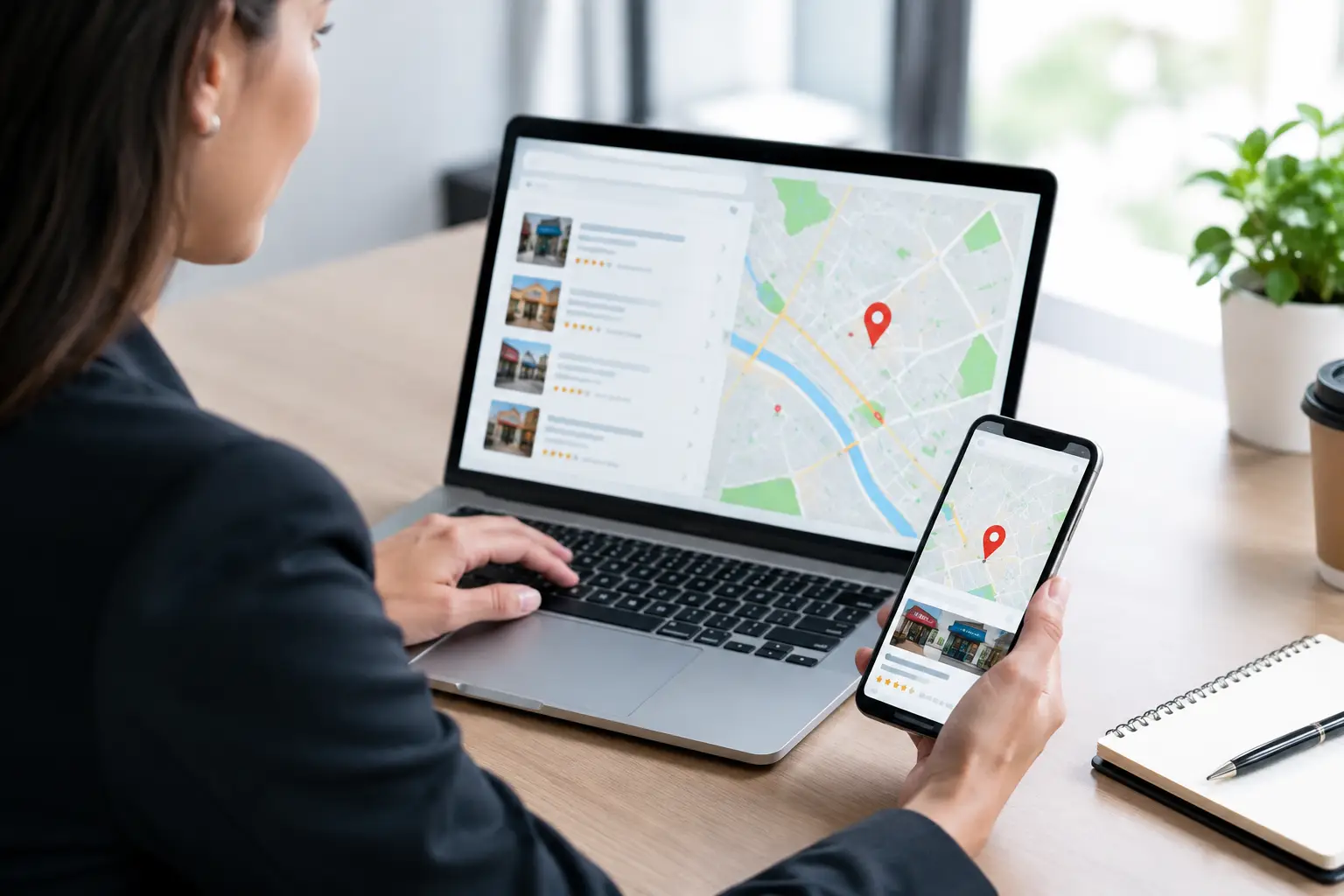
A customer searching for a local electrician, accountant or builder may no longer read through ten blue links before making a decision. They may ask Google a detailed question, use an AI assistant for recommendations, or search a phrase such as “website designer near Stourbridge”. AEO and AI website optimisation help your business give clear, trustworthy answers wherever those decisions begin.
For local businesses, this is not about chasing the latest technology for its own sake. It is about making sure your website explains who you are, what you do, where you work and why a potential customer should contact you. The fundamentals still matter, but the way search engines and AI-led tools interpret them is changing.
What AEO and AI website optimisation mean
AEO stands for Answer Engine Optimisation. Traditional SEO aims to improve your visibility in organic search results. AEO focuses on helping search engines, voice assistants and AI-generated search results identify a direct, reliable answer from your website.
For example, someone might search, “How much does a boiler service cost in the West Midlands?” or “Which web designer can maintain my website after launch?” An answer engine looks for useful, well-supported information that addresses the question plainly. It may display a short answer, recommend relevant businesses or use information from several credible sources to create an overview.
AI website optimisation is closely related. It means structuring and writing your site so that modern search systems can understand its content, context and authority. This includes clear page structure, accurate business information, relevant service pages, helpful copy and sound technical foundations.
Neither approach replaces SEO. Think of them as an extension of good SEO. A website that is hard for people to use, slow to load or vague about its services will struggle in normal results and AI-assisted results alike.
Why this matters for West Midlands businesses
Small businesses often have an advantage over larger national competitors: real local knowledge. A Stourbridge business can explain the areas it serves, the types of customers it helps and the practical issues those customers face. That specificity is valuable when someone asks a location-based question.
The catch is that local experience needs to be visible on the website. A generic page saying “we offer quality services at competitive prices” gives very little for a search engine, AI tool or customer to work with. A page that clearly describes a service, who it is for, the areas covered, typical timescales and how to get started is far more useful.
This does not mean every page needs to be stuffed with place names. Overdoing local keywords can make copy awkward and unconvincing. Instead, use genuine local detail where it helps a visitor make a decision: service areas, case studies, local delivery arrangements, appointment availability or experience with relevant property types and industries.
Start with the questions customers actually ask
The most effective AEO work begins before a website is redesigned or a blog post is written. It begins with your customers’ questions.
Your team probably hears them every week. How quickly can you attend? Do you provide free quotations? Can you work outside normal hours? What is included? Do you cover my area? What happens after I place an order? These are not minor details. They are often the questions that determine whether someone gets in touch.
Build useful answers into the appropriate pages rather than hiding everything in a general contact form. A roofing company could explain its emergency call-out process. An accountant could clarify which businesses it supports and when new clients should make contact. A retailer could set out delivery, collection and returns information in straightforward language.
Keep answers specific, honest and current. If a price depends on the job, say so and explain the factors involved. If you do not cover every part of the West Midlands, state your usual service area. Clear boundaries build trust and reduce wasted enquiries.
Write for people first, then make the meaning clear
There is no benefit in writing as though you are trying to impress a machine. AI systems are designed to assess language used by people, so natural writing remains the best starting point.
Use descriptive headings, short paragraphs and plain wording. Name the service in the page heading. Explain the outcome for the customer, not only the features of your process. Where a specialist term is necessary, explain it once rather than assuming every visitor understands it.
A good test is simple: could a busy customer scan the page on a phone and understand what you offer within a minute? If not, the page probably needs tightening before any advanced optimisation work begins.
Give each important service its own page
A common issue on smaller business websites is trying to cover everything on one services page. That can be enough for a very simple brochure site, but it limits how clearly you can explain individual offers.
Separate pages give you space to answer the questions connected to each service. A heating engineer may need distinct pages for boiler servicing, repairs and installations. A web agency may need separate pages for web design, website hosting, SEO and ongoing maintenance. Each page can then address the customer need, the process, likely expectations and the best next step.
There is a balance to strike. Creating dozens of thin pages that repeat nearly identical wording will not help. Each page should have a genuine purpose and enough useful information to stand on its own. If two services are usually bought together and involve the same customer journey, one stronger page may be the better choice.
Make your business facts consistent
Answer engines need confidence in basic facts before they can confidently present a business as a relevant option. Your company name, telephone number, address or service area, opening hours and core services should be accurate across your website.
Your contact page matters, but these details should not be limited to it. Make it easy for a visitor to find a telephone number, submit an enquiry and understand where you operate. If your business serves customers at their premises rather than from a walk-in office, make that clear too.
Trust is strengthened by showing the people and experience behind the business. This may include years in operation, relevant qualifications, genuine testimonials, project examples, accreditations and clear terms where appropriate. Do not make claims you cannot support. AI-generated summaries can spread information quickly, so accuracy matters more than ever.
Technical quality still does the heavy lifting
There is no shortcut around a well-built website. Search engines and visitors both benefit from secure hosting, mobile-friendly layouts, sensible navigation and pages that load promptly. Broken forms, expired security certificates, duplicate content and missing page titles can all undermine otherwise good content.
Structured data can also help search engines interpret key information, such as your organisation, services, reviews, opening hours and frequently asked questions. It is useful when it accurately reflects content already visible on the page. It is not a licence to add misleading ratings, invented FAQs or information a customer cannot verify.
For many business owners, this is where working with one local digital partner is valuable. Content, design, hosting, security and SEO affect one another. When they are managed separately, small problems can be missed or take longer to resolve.
Use AI carefully when creating website content
AI tools can help with early research, content outlines, alternative wording and identifying questions customers might ask. Used well, they can save time. Used carelessly, they can produce bland pages that sound like every other business in the market.
Your expertise is the part that cannot be copied from a prompt. Add the real details: how you work, what customers should prepare, the common mistakes you see, realistic timeframes and the situations in which your service is most useful. Check every factual statement before publishing, especially prices, legal information, technical advice and local claims.
It is also worth reviewing older pages. Outdated opening hours, obsolete services and copied product descriptions create confusion for visitors and weaken the reliability signals your site sends.
Measure outcomes, not just rankings
Higher visibility is useful only when it leads to worthwhile business. Track enquiries, telephone calls, booking requests, online sales and the quality of leads alongside search rankings. A page that ranks for a broad question but attracts people outside your service area may need a clearer local focus.
Changes can take time, particularly in competitive sectors. Results also depend on your location, reputation, existing website authority and how well-established competitors are. The sensible approach is consistent improvement: publish helpful pages, keep business information current, resolve technical issues and learn from the questions real customers ask.
A website should make it easy for the right person to choose you. If it gives clear answers, proves you are a credible local business and provides a simple route to get in touch, it is prepared not only for AI-led search, but for the customer standing behind every search.