



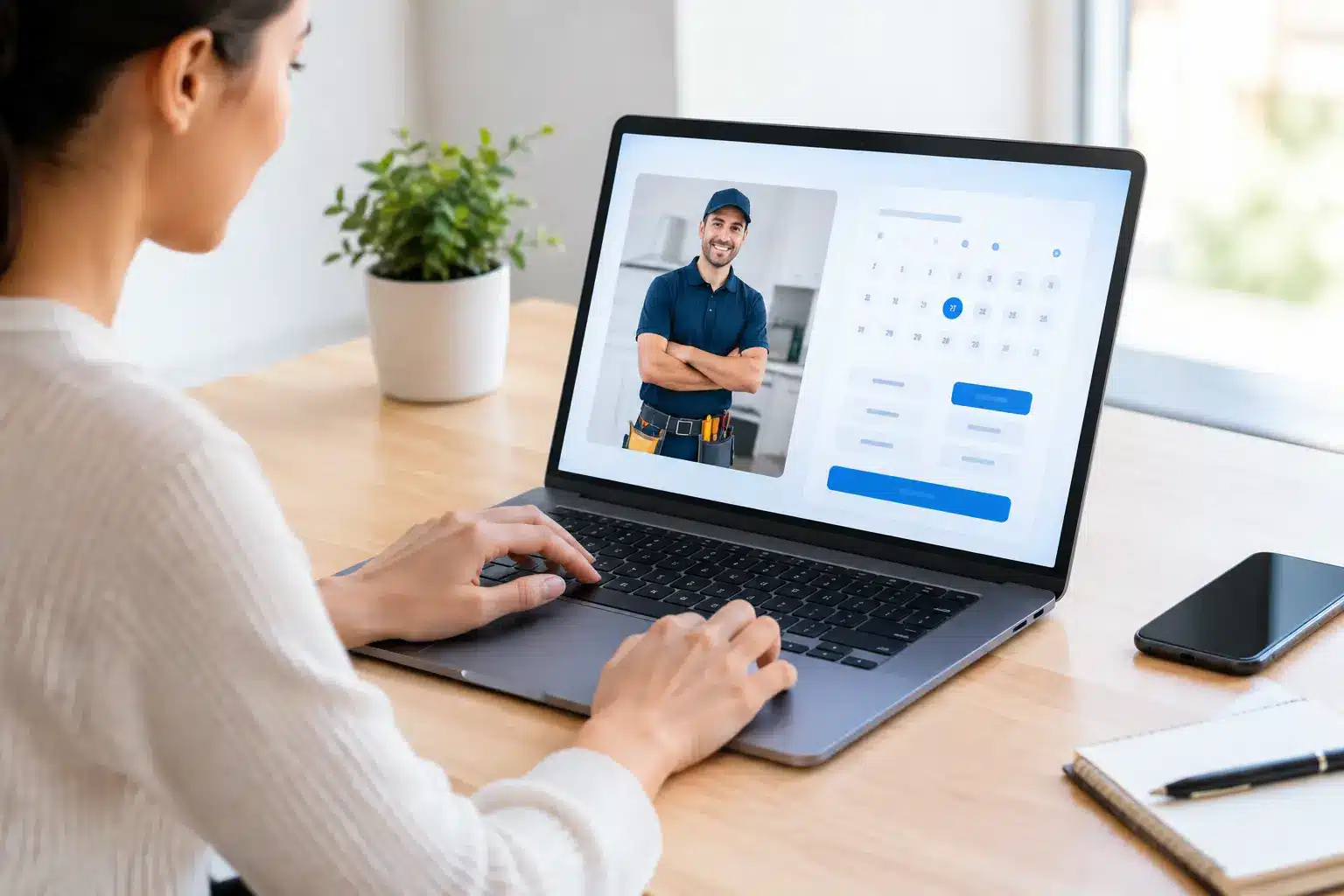
A customer finds your business at 9pm, after work, and wants to book a haircut, inspection, treatment or consultation. If they have to wait until morning to ring, fill in a vague contact form or exchange several messages, there is a fair chance they will choose someone else. A booking website for service business gives local customers a simple way to choose a service, see availability and secure a suitable time when they are ready.
For businesses across Stourbridge and the West Midlands, online booking is not about replacing personal service. It is about removing unnecessary friction before that service begins. The right system can reduce administration, prevent double bookings and help you turn website visits into confirmed work.
When an online booking website makes sense
Online booking is particularly useful where appointments follow a clear pattern. Beauty salons, barbers, personal trainers, therapists, driving instructors, clinics, tutors, tradespeople offering surveys, and consultants can all benefit. Customers understand what they are booking, how long it will take and, in many cases, what it will cost.
It can also work well for businesses with more variable jobs, but the booking journey needs a different approach. A plumber may not be able to offer a fixed time and price for every repair, for example. In that case, the website might let customers book a call-back slot or an initial assessment rather than promise an appointment that cannot realistically be kept.
That distinction matters. A booking system should reflect how your business actually operates, not force you into a process that creates more problems behind the scenes.
What a booking website for service business should do
The best booking pages feel straightforward to customers. They should be able to find the relevant service, select a date and time, provide the essential details and receive confirmation without needing instructions. Behind that simple experience sits a system designed around your working day.
Show services clearly
Every bookable service needs a plain-English name, a short explanation, an accurate duration and a price where appropriate. Avoid making customers guess whether a “standard appointment” means 20 minutes or an hour. Clear choices reduce incorrect bookings and save time answering routine questions.
If you offer several similar services, group them sensibly. A salon could separate cuts, colours and treatments. A professional adviser might distinguish between an introductory call, a review meeting and a paid consultation. Keep the number of choices manageable, particularly on mobile phones.
Use availability that matches real life
Your calendar must allow for more than opening hours. It should account for travel time, preparation, lunch breaks, staff rotas, holidays and the gaps needed between appointments. A mobile service business may need larger booking windows by area, while a clinic may need different availability for each practitioner.
This is where a well-configured system earns its keep. Showing every empty 30-minute space may look productive, but it can leave you travelling back and forth across the region or without enough time to complete jobs properly. Availability should support profitable work, not merely a full diary.
Send confirmations and reminders
Automatic confirmations give customers confidence that their booking has gone through. Reminder messages shortly before the appointment can reduce no-shows, particularly for longer or higher-value services.
The wording should be helpful rather than impersonal. Include the date, time, location, any preparation required and a simple way to rearrange where your policy allows it. For on-site appointments, a reminder to provide access, parking information or photos of the issue can make the visit more efficient.
Take payments where they are appropriate
Deposits and pre-payments are useful for services where missed appointments are costly. They can protect a salon chair, a treatment slot or a consultation that could otherwise have been sold to another customer. They also give customers a clear commitment at the point of booking.
However, payment is not necessary for every business. For a free initial meeting, an estimate visit or a repair that needs assessment first, asking for money too early can deter genuine enquiries. The right choice depends on your service, average order value and cancellation rate.
Design the journey around the customer
A booking function is only effective if customers can reach it and trust it. That starts with a mobile-friendly website. Many people will search locally, compare a few options and make their decision from a phone, often between other tasks. Small text, slow pages and complicated forms give them a reason to leave.
Place clear booking buttons where customers expect them: in the main navigation, on individual service pages and near your contact details. The call to action should say what happens next, such as “Book a consultation” or “Choose an appointment”. Generic wording can work, but specific wording is more reassuring.
The page should answer practical questions before the customer books. Explain your service area, parking or visiting arrangements, cancellation terms, whether children or pets are welcome where relevant, and what they should bring. You do not need to overload the page, but uncertainty is one of the main causes of abandoned bookings.
Local credibility also helps. A clear business address where appropriate, genuine customer feedback, staff information and professional photography can make a significant difference. People are more comfortable booking with a real local business they can identify than with an anonymous form.
Do not treat booking as a standalone feature
A booking calendar can be added to almost any website, but it should be connected to the wider digital picture. Your service pages need to explain why someone should choose you. Your search visibility needs to bring in relevant local visitors. Your hosting, security and maintenance need to keep the site reliable when people are trying to book.
It is also worth deciding who receives booking notifications and what happens if an appointment needs attention. If a member of staff is away, can someone else respond? If a payment fails, does the customer know what to do? If a slot is no longer available because of an offline commitment, can it be blocked quickly?
These are ordinary operational details, but they shape the customer experience. A booking system that sends a confirmation for an appointment you cannot honour can damage trust faster than having no online booking at all.
Choose between instant booking and enquiry-led booking
There is no single best model. Instant booking is ideal when the service, duration and availability are predictable. It suits repeat appointments especially well, because existing customers often want speed and familiarity.
An enquiry-led approach is better when jobs vary widely, pricing depends on the work involved or staff need to confirm the right person for the job. The website can still offer a structured request form with preferred dates, address details and a description of the work. That gives your team useful information while keeping control of the final appointment.
Some businesses benefit from a combination. A fitness professional might allow instant bookings for established classes but use a request form for personal training assessments. A trades business could offer fixed slots for boiler servicing while handling breakdowns through a priority call-back process.
Plan for the work after launch
Launching the website is the beginning, not the point at which it should be left alone. Check how customers use the booking process. Are they dropping out at a particular step? Are certain services rarely selected? Are people booking unsuitable times? The answers may point to a simple change in wording, duration, pricing or availability.
Keep service information current too. Old prices, unavailable staff members and expired offers make a business look poorly managed. Regular website maintenance, security updates and reliable hosting are particularly important when customer details and payments are involved.
At Web Design Stourbridge, we help businesses build booking websites around the way they work, rather than handing over a generic template and expecting them to manage the technical details alone. From the initial design to hosting, security and ongoing support, the aim is to make online bookings practical for both your customers and your team.
The most useful next step is to map one common customer journey from first search to completed appointment. If you can make that journey clear, quick and dependable, your website can keep bringing in bookings long after the working day has finished.