




A website that looks acceptable on a phone is not automatically a website that brings in enquiries. For many local business owners, the real question behind website builder vs web designer is not simply who can make a site cheaper. It is whether the finished website will reflect the business properly, be found by the right people, and remain straightforward to manage once it is live.
A builder can be a sensible starting point for some businesses. A professionally designed website can be a better investment for others. The right decision depends on your time, confidence, plans for growth and how much your website needs to do for the business.
Website builder vs web designer: the main difference
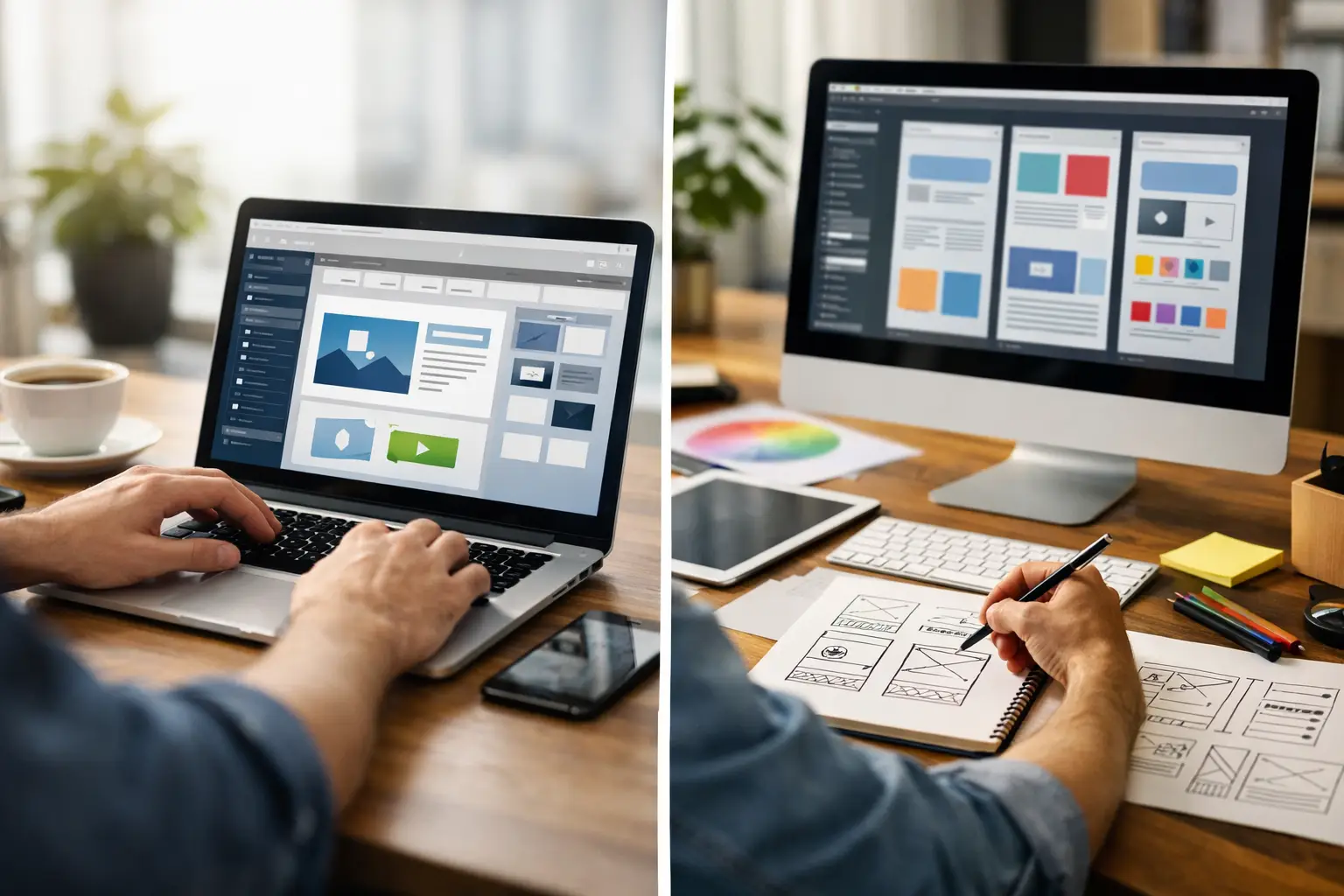
A website builder is an online platform that lets you create a website using pre-built templates and drag-and-drop tools. You choose a design, add text and photographs, select colours, and publish the site through the platform. Most builders include hosting and basic features such as contact forms, galleries and online shop tools.
A web designer works with you to plan and create a website around your business, customers and goals. The work may include page structure, visual design, copywriting support, mobile layouts, search engine foundations, hosting, security and ongoing maintenance. Rather than beginning with a template and fitting your business into it, the process starts with what your customers need to see and do.
Neither route is automatically right or wrong. A self-employed decorator who needs a simple online brochure may have different needs from a growing manufacturer that relies on quote requests, product information and a professional first impression. The key is to judge the whole cost and outcome, not just the initial monthly price.
When a website builder is a good choice
Website builders appeal because they appear quick and affordable. If you are testing a new idea, promoting a short-term event, or need a very basic holding page, they can be useful. You can make changes yourself without waiting for another person, which suits owners who enjoy working on their own marketing and have time to keep information current.
They can also work for a small business with a clear, limited requirement: perhaps a handful of pages, a contact form, a service list and a few photographs. If you are comfortable writing your own copy, resizing images and checking how each page works on mobile, a builder may get you online quickly.
However, the apparent simplicity can be misleading. A blank template still requires decisions about page order, headlines, calls to action, image choices, search terms, legal pages, cookie settings and mobile spacing. These are the details that often separate a site that merely exists from one that makes it easy for a customer to get in touch.
There is also the question of ownership and flexibility. Some builders make it difficult to move your website elsewhere later, or charge more as you add useful features. Before committing, check what is included in the monthly fee, how backups work, whether you can export content, and what support is available when something goes wrong.
What a web designer brings to the project
A professional web designer is not just there to make a homepage look polished. The value is in turning your business knowledge into a clear customer journey. A visitor should quickly understand what you do, where you work, why they should choose you and how to take the next step.
For a West Midlands business, that might mean building service pages around the areas you cover, showing genuine project examples, making telephone contact prominent on mobile, and placing enquiry options where customers expect them. A local trades business may need quote requests and trust signals. A retailer may need reliable stock management and delivery information. A professional service may need content that explains a complex offer in plain English.
A designer can also spot problems before launch. These include oversized images that slow pages down, weak calls to action, confusing navigation, inconsistent branding and forms that ask for too much information. They can make sure the site is responsive across phones, tablets and desktop screens, because many local searches begin on a mobile device.
Most importantly, a good designer gives you a person to call. When you need a new service page, a seasonal promotion, a security update or help understanding visitor enquiries, you are not left searching a support forum for an answer. This continuing relationship matters to businesses that do not have an in-house marketing or IT team.
Compare the true cost, not the entry price
A website builder usually has a lower upfront cost. You may pay a monthly subscription, buy a domain name and perhaps pay extra for premium templates, email services, ecommerce functions or apps. Your own time is the hidden cost. If building the site takes several weekends, and it still needs reworking later, the saving can shrink quickly.
A web designer normally involves a larger initial investment because the work is planned and delivered for you. That price should be clear about what is included: design, build, content support, revisions, hosting, security, training and post-launch help can vary between providers.
The best comparison is commercial rather than cosmetic. Ask what a missed enquiry is worth to your business. If clearer service pages, faster loading times and stronger contact options help generate even a small number of extra jobs, the website may pay for itself far sooner than expected. Equally, if a simple site is all you genuinely need, paying for complex bespoke functions would not be sensible.
Control is useful only if you have time to use it
The promise of full control is one of the strongest arguments for a website builder. But control can become another task on an already busy list. Business owners often start with good intentions, then leave old prices, expired offers or outdated team details on the website because day-to-day work takes priority.
With a designer, you can choose the level of involvement that suits you. Some clients want to edit blog posts and news themselves after training. Others prefer to send an email with the changes and have them handled as part of a maintenance arrangement. Both options can work, provided responsibilities are agreed from the start.
It is also worth separating content control from technical responsibility. Updating a paragraph is one thing. Managing software updates, backups, spam protection, security certificates and a website outage is another. These tasks are easy to overlook until they cause a problem, particularly for a website that collects customer information or takes online payments.
Think about visibility before you build
A well-designed site cannot guarantee first-page rankings, and neither a builder nor a designer removes the need for ongoing marketing. But the platform and setup can make future search engine work easier or harder.
A website needs logical page titles, useful service content, fast-loading images, clear headings and a structure that search engines can understand. It also needs pages that answer the questions local customers actually ask. A generic template with a few short paragraphs is unlikely to compete well against businesses that explain their services clearly and show evidence of experience.
This is where an integrated approach can save time. Web Design Stourbridge can bring design, hosting, search engine optimisation, copywriting and ongoing support together, so the website is built with its next stage in mind rather than treated as a one-off design job.
Questions to ask before deciding
Before choosing either option, be honest about what you need the website to achieve over the next two or three years. Will it only confirm your contact details, or should it generate quote requests? Do you need online bookings, ecommerce, different user access, integrations or regular marketing campaigns? Will you have time to update it, or would you rather concentrate on customers?
Also consider the impression your current and future customers expect. In competitive sectors, an off-the-shelf appearance, unclear messaging or poor mobile experience can quietly reduce trust. For a business built on recommendations and local reputation, the website should support the standard of service you deliver in person.
A website builder is a practical tool when requirements are modest and you are ready to take responsibility for the work. A web designer is often the stronger route when your website is expected to win business, represent an established brand and receive ongoing attention. The useful next step is not to choose the cheapest route by default, but to choose the level of support that lets your website keep working while you run the business.