



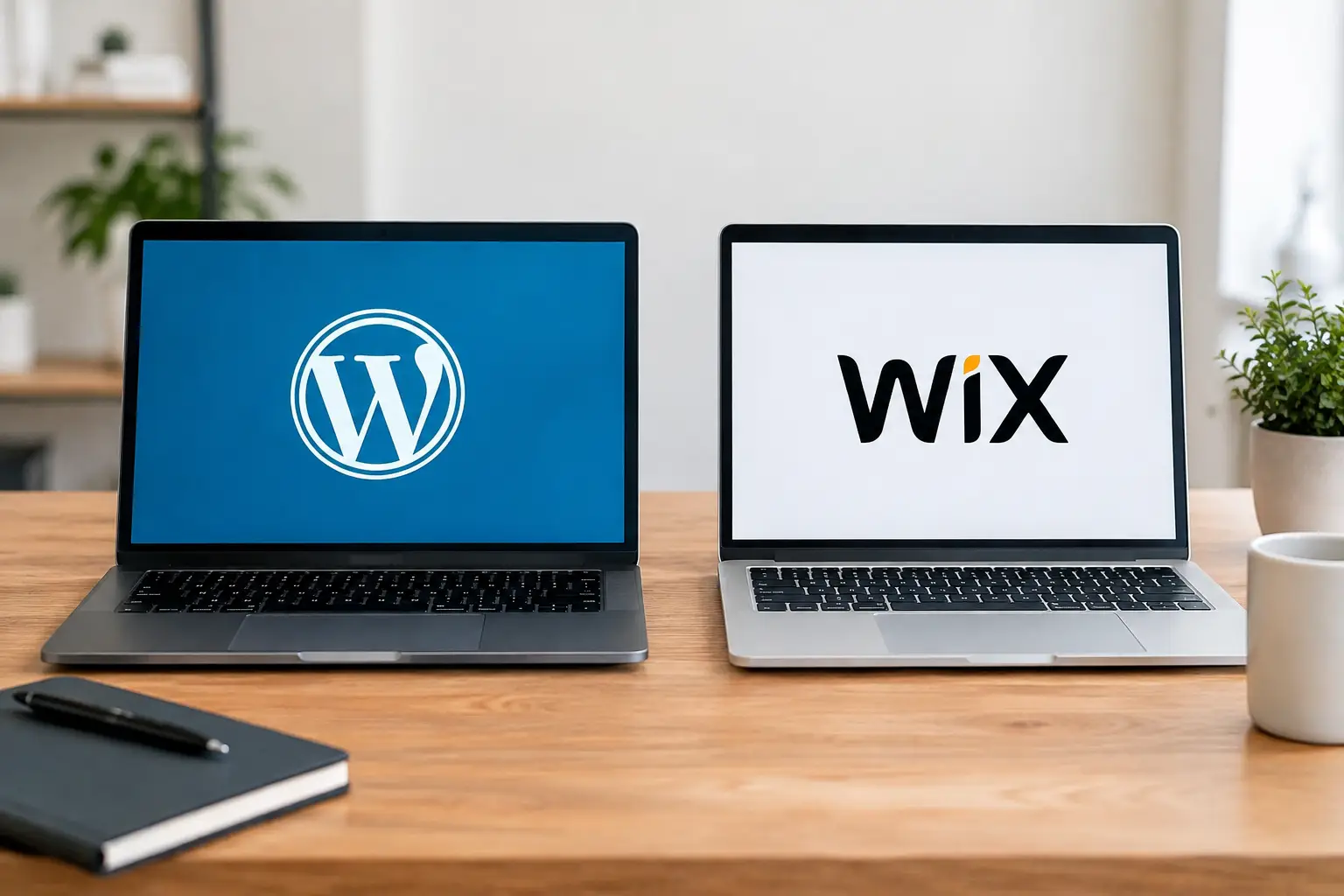
A website can look smart on launch day and still become a frustration six months later. Perhaps you need to add a new service, take bookings, improve Google visibility or update an offer without disrupting the rest of the site. That is why the WordPress vs Wix for business decision deserves more thought than simply choosing the builder with the nicest templates.
Both platforms can produce professional websites for local businesses. The better choice depends on what your business needs the website to do, who will manage it and how much room you need to grow. For a small Stourbridge business, the right answer is often less about features on a comparison chart and more about time, ownership and dependable support.
WordPress vs Wix for business: the practical difference
Wix is an all-in-one website builder. It provides the editor, hosting, templates and many built-in tools under one account. You choose a design, add your pages and publish from the same place. This makes it appealing if you want a straightforward brochure site and prefer not to deal with technical decisions.
WordPress is a content management system that is typically installed on separate web hosting. It gives you far more choice over the design, functionality and providers involved. A specialist can build a tailored site around your requirements, then continue to manage the technical side for you.
Neither approach is automatically right or wrong. Wix places simplicity first. WordPress places flexibility and control first. The trade-off is that WordPress needs proper setup, security updates and maintenance, while Wix can become restrictive when a business outgrows its original website.
When Wix is a sensible choice
Wix can work well for a new business that needs a clean, simple website quickly. A local decorator, consultant or small service provider may only need a handful of pages, a contact form, service details and a gallery of work. Its visual editor can make routine changes feel approachable, particularly for owners who want to update wording themselves.
The platform also includes useful features for appointments, basic online selling, email capture and social media connections. For a business with limited requirements and no plans for complex functionality, these tools can be enough.
The main advantage is convenience. Hosting and platform updates are handled within the Wix subscription, so there is less for an owner to configure. However, convenience is not the same as complete freedom. Moving a Wix website to another platform later is not always straightforward, and more specialised features may require workarounds or paid add-ons.
Wix can also be less suitable when several people need to manage the website, when content grows substantially or when specific integrations become essential. It is worth choosing it because it matches a clear requirement, not because it appears to be the cheapest route at the outset.
Why many growing businesses choose WordPress
WordPress is well suited to businesses that see their website as an ongoing sales and marketing asset rather than a fixed online leaflet. It can support anything from a focused five-page site to a substantial ecommerce store, booking system, membership area or content-led website.
A professionally built WordPress site can be tailored to your branding, customer journey and the actions you want visitors to take. That might mean requesting a quote, calling your office, booking an appointment or purchasing online. Instead of adapting your business around a fixed template, the website can be designed around how you work.
It is also a strong option for businesses investing in search engine optimisation. WordPress gives greater control over page structure, service pages, location content, image optimisation and technical SEO settings. These are not guarantees of high rankings, but they give an experienced provider more scope to improve the site over time.
The responsibility side should not be ignored. WordPress needs secure hosting, software updates, backups and occasional troubleshooting. Poorly maintained sites can develop security or performance issues. For busy owners, this is a reason to have an agency manage the site, not necessarily a reason to avoid WordPress altogether.
Look beyond the monthly price
Wix usually presents a clear monthly or annual subscription price, which is helpful for budgeting. The cost can rise as you add ecommerce, booking tools, premium apps or more storage. It is sensible to check what you will actually need before selecting a plan.
With WordPress, costs are split across hosting, a domain, any premium tools and professional support. A basic site may appear more expensive initially because it is built specifically for your business. Yet it can offer better long-term value if it avoids a costly rebuild when your needs change.
The key question is not simply, “Which is cheaper?” Ask what happens when you need a new landing page for a Google Ads campaign, a stronger enquiry process, a better online shop or a redesign in two years’ time. A low starting cost is only good value if the site continues to support the business.
Marketing, SEO and local visibility
For many West Midlands firms, the website’s real job is to generate calls, enquiries and visits. Both Wix and WordPress can be optimised for search, and both can host useful service pages, customer testimonials and contact details. A well-written page that answers a customer’s question will always matter more than the platform badge in the footer.
That said, WordPress is generally more adaptable for an ongoing SEO strategy. It is easier to develop detailed service and area pages, publish regular advice articles, refine technical settings and connect specialist marketing tools as your strategy develops. This makes it a practical choice for businesses competing across Stourbridge, Dudley, Halesowen and the wider region.
Wix is capable of basic SEO, particularly for a small site with a limited local focus. Problems tend to appear when a business needs greater control, a larger content library or more advanced integration with marketing systems. If online visibility will be a major source of leads, build with that future requirement in mind.
Ecommerce and customer journeys
If you sell a few simple products, Wix can provide a manageable starting point. It lets small retailers create product pages, accept payments and manage basic orders without assembling lots of separate components.
For a business with a growing catalogue, different delivery rules, trade accounts, subscriptions or more involved stock management, WordPress with the right ecommerce setup usually offers more scope. It can be configured around your operations rather than forcing you to simplify them for the platform.
The same principle applies to service businesses. A simple appointment tool may be enough for one person offering consultations. A multi-staff clinic, training provider or trades business with varied enquiry routes may need something more tailored. Start with the customer’s journey, then select the technology that supports it.
Who should manage the website?
Some business owners want full control of every word and image. Others want to send an email or make a quick call when a change is needed. There is no prize for doing website administration yourself if it takes time away from customers, jobs and staff.
Wix is designed for owners who want to make their own routine amendments. WordPress can also be easy to edit when it has been built properly, but its best results often come from combining owner access with professional maintenance. This gives you the freedom to update everyday content while someone else monitors backups, security and performance.
At Web Design Stourbridge, we find that many businesses value having one local team to handle design, hosting, updates and marketing support. It removes the uncertainty of trying to work out which provider is responsible when something needs attention.
Make the decision based on your next two years
Choose Wix if your needs are genuinely simple, you want an all-in-one platform and you are happy to work within its templates and available tools. It can be an efficient choice for a modest website that is unlikely to require complex development.
Choose WordPress if your website needs to generate regular leads, support a growing content strategy, connect with other systems or develop alongside the business. It is particularly worthwhile when you want a site that is tailored, scalable and supported rather than a tool you have to learn around.
Before committing, write down what customers should be able to do on the site now and what you expect to need in the next two years. That short exercise often makes the right platform much clearer, and helps ensure your website remains a useful part of the business rather than another task on your list.